
Abstract
An air preheater plate is a vital component in air preheater systems, recovering waste heat from flue gas and transferring it to incoming combustion air before it enters a boiler, furnace, kiln, or industrial burner.
By raising the temperature of the combustion air with residual exhaust heat, air preheater plates can significantly improve thermal efficiency, reduce fuel consumption, stabilise combustion, and lower overall emissions.
According to literature on boiler engineering and industrial heat recovery, properly designed air preheater systems can improve combustion efficiency by several percentage points, resulting in meaningful energy savings in large-scale thermal operations. The geometry, material selection, and plate configuration of air preheater plates directly affect heat transfer performance, pressure drop, fouling resistance, and service life.
Referenced Literature / Sources:
- Steam: Its Generation and Use – Babcock & Wilcox
- Industrial Boiler Heat Recovery Engineering Manuals
- Thermal Design References for Regenerative and Recuperative Air Preheaters
What Is the Purpose of the Air Preheater Plate?
The main function of an air preheater plate is to transfer waste heat from hot exhaust or flue gases to incoming combustion air, which then enters the combustion chamber. This improves the efficiency of combustion, reduces fuel consumption, and enhances the thermal performance of boilers, furnaces, and industrial heating systems.
In simple terms:
An air preheater plate helps industrial heating systems to recycle heat that would otherwise be wasted in order to preheat combustion air.
Since the combustion air enters the burner at a higher temperature, less energy is required by the fuel to reach the desired flame temperature, resulting in more efficient combustion.
What Is an Air Preheater Plate?
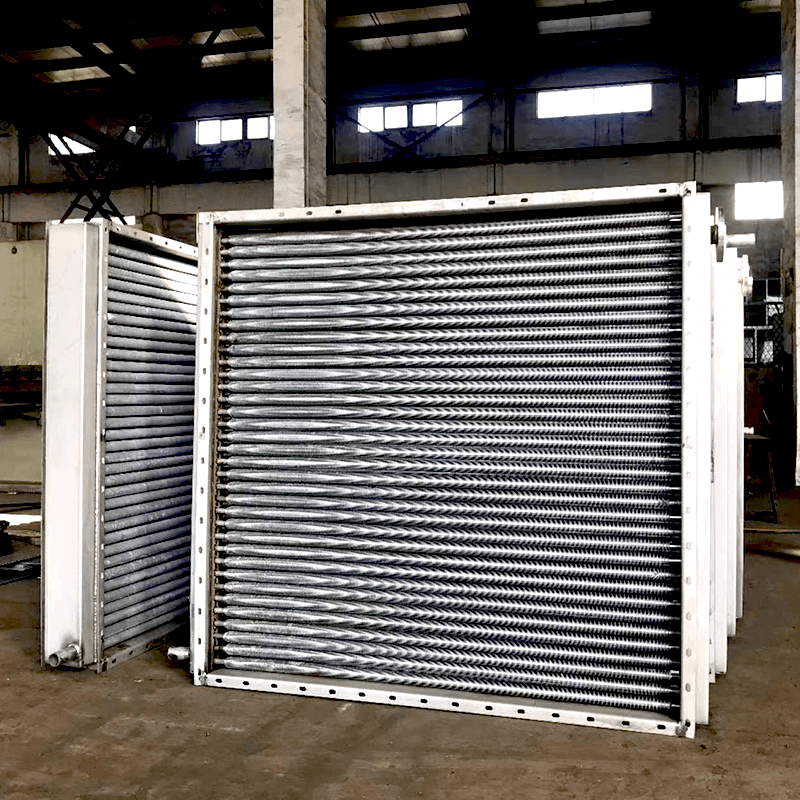
An air preheater plate is a heat exchanger installed inside an air preheater assembly. It forms the core heat-transfer surface that enables thermal exchange between the following:
- hot flue/exhaust gas leaving the combustion system; and
- cold incoming combustion air entering the burner system.
The plate may be flat, corrugated, profiled, or specially embossed, depending on the air preheater design.
Air preheater plates are widely used in:
- utility boilers
- power plants
- cement kilns
- steel furnaces
- waste incinerators
- thermal oil heaters
- industrial burners
Why Air Preheater Plates Matter in Industrial Systems?
Without heat recovery, exhaust gases often leave thermal systems carrying substantial residual energy. Allowing this heat to escape wastes fuel and reduces the efficiency of the system.
Air preheater plates solve this problem by reclaiming some of that thermal energy.
Core functional benefits:
- Recover waste heat
- Improve combustion efficiency
- Reduce fuel usage
- Lower operating costs
- Decrease flue gas losses
- Improve burner stability
- Reduce emissions
- Enhance overall boiler/furnace efficiency
How an Air Preheater Plate Works?
The air preheater plate acts as a thermal transfer medium.
Working principle:
Step 1: Hot flue gas enters the heat recovery section.
After combustion, high-temperature flue gas exits the combustion chamber and enters the air preheater.
Step 2: Heat transfers to the plate surface
As the flue gas comes into contact with the surface of the air preheater plate, thermal energy is transferred into the metal plate.
Step 3: Incoming air flows across the opposite side.
Cold combustion air flows over or through the opposite side of the plate structure.
Step 4: The plate transfers heat to the air.
The heated plate conducts thermal energy into the incoming air stream.
Step 5: Preheated air feeds the combustion chamber.
Warmer combustion air enters the burners/boilers, improving ignition and combustion efficiency.
Functional Role of Air Preheater Plate in Thermal Systems
| Function | Operational Benefit |
| Heat Recovery | Reduces wasted exhaust energy |
| Air Preheating | Improves combustion temperature |
| Fuel Reduction | Lowers energy consumption |
| Emission Reduction | Improves combustion completeness |
| Efficiency Improvement | Raises overall thermal efficiency |
Main Purposes of an Air Preheater Plate
- Improve combustion efficiency
Preheating the combustion air enables it to burn more completely and consistently.
Benefits include:
- Faster ignition
- Better flame stability
- Improved fuel-air mixing
- More complete fuel burn
- Reduce fuel consumption
Since the incoming air is already warm, less fuel is needed to reach the target combustion temperature.
- Less fuel is needed to reach the target combustion temperature
- Boiler/furnace efficiency increases
- Even modest efficiency gains can generate significant savings in large-scale plants.
- Lower exhaust heat losses
Air preheater plates reduce stack/flue temperature by extracting usable heat.
- Reduce emissions
Better combustion can reduce the following:
- CO emissions
- Unburned hydrocarbons
- Fuel waste
- Increase system capacity
Some systems can achieve an increased thermal output with preheated combustion air.
Types of Air Preheater Plates
Air preheater plates are essential components for heat transfer in regenerative and recuperative air preheaters. Different plate profiles and structures are designed to optimise heat transfer efficiency, pressure drop, and fouling resistance according to operating conditions.¹
- Flat plates
- Simplest structural design with smooth surface geometry
- Suitable for low-fouling and low-pressure-drop applications
- Easier to manufacture and maintain
- Corrugated plates
- Feature wave-shaped or corrugated surface patterns
- Increase turbulence to improve heat transfer efficiency
- Commonly used in high-performance heat recovery systems
- Basket-type plates
- Installed in modular baskets for regenerative air preheaters
- Allow for convenient replacement and maintenance
- Widely used in utility boilers and thermal power plants
- Profiled/Formed Heat Transfer Plates
- Engineered with optimised embossing or formed patterns
- Designed for enhanced thermal efficiency and reduced pressure loss
- Used in demanding industrial heat recovery applications
Common Air Preheater Plate Designs
| Plate Type | Advantages | Typical Application |
| Flat Plate | Low cost, simple | Small systems |
| Corrugated Plate | Better heat transfer | Industrial boilers |
| Embossed Plate | High efficiency | Advanced APH designs |
| Basket Elements | Modular replacement | Rotary APH systems |
Material Selection for Air Preheater Plates
It is essential to select the proper plate material to ensure thermal efficiency, corrosion resistance, and a long service life.
Key selection factors:
- Operating temperature
Higher temperatures require heat-resistant alloys or upgraded steel grades.
- Corrosive environment
Sulfur compounds, acidic condensates, and flue gas composition impact material choice.
- Wear and erosion conditions
Dust-laden gas streams may require abrasion-resistant materials
- Cost vs. performance balance
Material must meet performance requirements while remaining economically viable.

Common Materials
- Carbon steel
- Economical and widely used
- Suitable for standard-temperature, low-corrosion applications
Advantages:
- Low cost
- Good formability
- Easy fabrication
- Corten/weathering steel
- Improved corrosion resistance compared to standard carbon steel
- Common in moderate flue gas environments
- Stainless steel
- Excellent corrosion and oxidation resistance
- Suitable for harsh or high-moisture operating conditions
Common grades:
SS304, SS316 and SS310 for higher temperatures
- Enamel-coated steel
A carbon steel substrate with a corrosion-resistant enamel coating. Widely used in cold-end baskets of regenerative air preheaters.
Benefits:
Excellent acid dew point corrosion resistance.
- Alloy steel/heat-resistant steel
Used in extreme temperature environments. Offers superior thermal and mechanical performance.
Key Design Factors Affecting Air Preheater Plate Performance
The performance of air preheater plates has a direct impact on heat recovery efficiency, boiler performance, and overall system energy consumption. The effectiveness with which the plates operate under real-world conditions is determined by several design variables.
- Plate profile geometry
Corrugation depth, pitch, and embossing pattern affect airflow turbulence.
Optimised geometry improves heat transfer efficiency while controlling pressure drop.
- Material selection
Material thermal conductivity impacts heat transfer performance
Corrosion and wear resistance determine long-term durability
- Plate thickness
Thinner plates enhance thermal transfer, while thicker plates improve mechanical strength and service life. Finding the right balance between efficiency and durability is critical.
- Heat transfer surface area
A larger effective surface area increases thermal exchange capacity, but must be optimised to avoid excessive airflow resistance.
- Gas flow distribution
Uneven flow can cause localised overheating or underperformance.
Proper basket and duct design improves distribution uniformity.
- Operating environment
The operating environment must be considered, including:
- Temperature range
- Flue gas composition
- Dust/ash concentration
- Humidity and acid dew point conditions Operating environment
- Temperature range
- Flue gas composition
- Dust/ash concentration
- Humidity and acid dew point conditions
Common Problems Affecting Air Preheater Plates
Over time, the performance of air preheater plates may degrade due to harsh operating conditions.
- Corrosion
Caused by acidic condensates, sulfur compounds, and moisture
Common in cold-end sections
- Ash and dust fouling
Deposits reduce heat transfer efficiency and increase pressure drop and airflow resistance.
- Erosion and abrasion
High-velocity, particulate-laden gas wears away at plate surfaces, leading to thinning and structural damage.
- Plate deformation
Thermal stress or mechanical loading can warp plates, reducing sealing effectiveness and airflow performance.
- Air leakage
Damaged seals or plate deformation increase leakage rates, reducing thermal efficiency and boiler performance.
- Blockage/plugging
Severe fouling can partially or fully block gas passages, causing major performance losses and pressure imbalances.
Common Air Preheater Plate Failure Modes
| Failure Mode | Cause | Result |
| Fouling | Ash/soot buildup | Reduced efficiency |
| Corrosion | Acid condensation | Material thinning |
| Erosion | Particle abrasion | Surface wear |
| Warping | Thermal stress | Air leakage / poor fit |
Maintenance Best Practices
Proper maintenance can significantly extend the service life of air preheater plates and preserve system efficiency.
- Conduct regular inspections
To monitor for corrosion, wear, deformation, and fouling, and identify early signs of performance degradation.
- Implement routine cleaning
Remove ash, soot, and dust deposits periodically.
Use soot blowers, water washing, or mechanical cleaning as appropriate.
- Monitor leakage rates
Track seal wear and leakage trends
Repair or replace seals promptly
- Replace damaged plates proactively
Do not wait for complete failure. Replace severely corroded, warped, or eroded plates during planned outages.
- Optimise operating conditions
Maintain flue gas temperature above the acid dew point where possible.
Reduce excessive dust loading upstream.
- Maintain detailed service records
Track inspection data, cleaning intervals, and replacement history to support predictive maintenance planning.
FAQ About Air Preheater Plate
Q1: What does an air preheater plate do?
It transfers waste heat from exhaust gas to incoming combustion air.
Q2: Why is preheating combustion air important?
It improves combustion efficiency and reduces fuel consumption.
Q3: Where are air preheater plates used?
In boilers, furnaces, kilns, power plants, and industrial heating systems.
Q4: What materials are used for air preheater plates?
Typically carbon steel, alloy steel, stainless steel, or enamel-coated steel.
Q5: How do air preheater plates fail?
Common causes include corrosion, fouling, erosion, and thermal fatigue.
Q6: Can replacing worn air preheater plates improve efficiency?
Yes—damaged or fouled plates can significantly reduce heat recovery efficiency.
Conclusion
The air preheater plate’s purpose is to recover waste heat from exhaust gases and transfer that energy to incoming combustion air. This improves combustion efficiency, reduces fuel consumption, lowers emissions, and enhances the overall performance of the thermal system. As one of the most important components for heat recovery in boilers and industrial heating systems, the air preheater plate directly impacts operational efficiency and plant economics.
For industrial operators, selecting the correct design, material, and maintenance strategy for the plate is essential to maximising air preheater performance and service life.