
Abstract:
Hydraulic connectors play a pivotal role in ensuring the seamless operation of hydraulic systems. These precision-engineered components serve as vital mechanical interfaces, designed to join hydraulic parts while preserving pressure integrity, ensuring tight fluid seals, and maintaining overall structural reliability.
Despite their importance, many issues within hydraulic systems stem from improper connector selection and installation, often leading to system leakage or outright failures. Studies, including those referenced by the American Society of Mechanical Engineers, consistently highlight joint fatigue and seal degradation as key risk factors, particularly in high-pressure fluid systems.
To address these challenges and enhance understanding within the industry, the 2026 Hydraulic Connector Guide offers a comprehensive analysis of everything related to hydraulic connectors.
Inside, readers will find detailed insights into connector types, their working principles, and the mechanisms behind effective sealing. The guide also delves into the materials employed in connector manufacturing, the diverse functions they serve, specific application areas, and crucial installation techniques that can help minimize risks.
Beyond this, it explores the cutting-edge technological advancements shaping the future of hydraulic connectors, providing valuable foresight for professionals in the field.
Whether you’re troubleshooting a system failure or aiming to optimize new installations, this guide is an indispensable resource for staying ahead in the dynamic world of hydraulic systems.
Introduction: Why Hydraulic Connectors Are Strategic Components in Modern Fluid Power Systems?
In fluid power engineering, much attention is typically placed on pumps, cylinders, motors, and control valves. However, the hydraulic connector is the structural and sealing backbone of the entire hydraulic circuit. Every pressure surge, thermal expansion cycle, and mechanical vibration ultimately passes through connectors. If a connector fails, the system fails.
In 2026, hydraulic systems are becoming:
- Higher pressure (often exceeding 6,000 PSI in mobile systems)
- More compact and weight-optimized
- More vibration-intensive (especially in electrified construction equipment)
- More environmentally regulated (zero-leak requirements)
- This evolution places unprecedented demand on connector design and performance.
This guide examines hydraulic connectors from multiple professional angles:
- Mechanical working principles
- Functional classifications
- Sealing technologies
- Structural designs
- Material science
- Industrial application sectors
- Emerging smart-connector innovations
What Is a Hydraulic Connector? Technical Definition and Core Purpose
Hydraulic connectors play a vital role in modern machinery, acting as the unsung heroes behind the seamless operation of hydraulic systems. These specialized mechanical couplings are engineered to form leak-free, pressure-resistant connections between key components like hoses, tubes, pipes, valves, pumps, and manifolds.
Their purpose goes far beyond simply linking parts together. Hydraulic connectors are designed to:
- – Enable efficient and secure transfer of fluids under high pressure
- – Withstand vibrations and pulsations to preserve sealing integrity
- Simplify assembly and disassembly during system maintenance
- – Adapt to changes in fluid direction when routing
- – Provide structural support when needed
What sets hydraulic connectors apart from standard low-pressure plumbing fittings is their capacity to endure the intense demands of hydraulic systems.
They are built to handle extreme pressure spikes, repetitive stress from cyclic loads, twisting forces, and environmental challenges such as moisture, salt exposure, and corrosive substances.
Their resilience and adaptability make them indispensable in ensuring the reliability and performance of hydraulic operations across a wide range of industries.
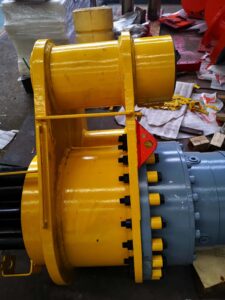
How Hydraulic Connectors Work?
Understanding the working mechanism of a hydraulic connector requires examining three core principles:
- Mechanical Retention
The connector must mechanically secure tubing or hoses. This is achieved via:
- Threaded engagement
- Flared seating
- Compression ferrules
- Flange bolting
- Locking sleeves in quick couplings
The mechanical structure resists axial separation forces caused by internal pressure.
- Sealing Mechanism
Hydraulic connectors prevent leakage using:
- Metal-to-metal sealing
- Elastomeric O-ring compression
- Thread deformation
- Ferrule bites into tubing
Sealing must remain stable during:
- Pressure cycling
- Temperature variation
- Vibration
- Fluid chemical exposure
- Pressure Distribution
Well-designed connectors distribute stress evenly to avoid localized fatigue. Flange connectors, for example, spread pressure across multiple bolts and sealing surfaces.
Types of Hydraulic Connectors by Sealing Principle
Hydraulic connectors are commonly categorized based on how they achieve sealing.
- Threaded Connectors
Threaded hydraulic connectors rely on tapered or parallel threads.
Examples include:
- NPT (National Pipe Tapered)
- BSPT (British Standard Pipe Tapered)
- BSPP (British Standard Pipe Parallel)
Threaded connectors are widely used due to simplicity and cost-effectiveness. However, tapered threads often require sealant to prevent micro-leakage.
- O-Ring Face Seal (ORFS) Connectors
ORFS connectors use an elastomeric O-ring positioned in a groove on the connector face. When tightened, the flat surfaces compress the O-ring to form a highly reliable seal.
Advantages:
- Superior vibration resistance
- High-pressure compatibility
- Excellent leak prevention
These are widely used in construction equipment and mobile hydraulics.
- 37° Flare (JIC) Connectors
Flare connectors use a 37-degree metal-to-metal seat to create sealing.
Features:
- Reusable
- High-pressure rating
- No additional sealant required
They are common in industrial and heavy equipment sectors.
- Compression (Bite-Type) Connectors
Compression fittings use ferrules that bite into tubing when tightened.
Advantages:
- Excellent sealing
- Suitable for instrumentation
- Resistant to vibration
- Often used in precision systems
Hydraulic Connector Types by Sealing Technology
| Connector Type | Sealing Method | Pressure Level | Reusability | Common Industries |
| NPT | Thread interference | Medium | Limited | General machinery |
| BSPP | O-ring with parallel thread | Medium-High | Moderate | European systems |
| ORFS | O-ring face compression | High | High | Mobile equipment |
| 37° Flare | Metal-to-metal seat | High | High | Industrial |
| Compression | Ferrule bite | Medium-High | Moderate | Instrumentation |
Types by Structural Configuration
Hydraulic connectors also vary in geometric form.
- Straight Connectors
Provide a linear connection.
- Elbow Connectors
Available in 45° and 90° designs to prevent hose stress.
- Tee Connectors
Enable branching flow.
- Cross Connectors
Allow four-direction flow distribution.
- Bulkhead Connectors
Designed for panel mounting applications.
Quick-Disconnect Hydraulic Connectors
Quick-disconnect (QD) connectors enable rapid connection and disconnection without fluid loss.
They contain internal valve mechanisms that close automatically when uncoupled.
Applications include:
- Agricultural machinery
- Emergency rescue tools
- Construction attachments
Benefits:
- Reduced downtime
- Improved serviceability
- Lower contamination risk
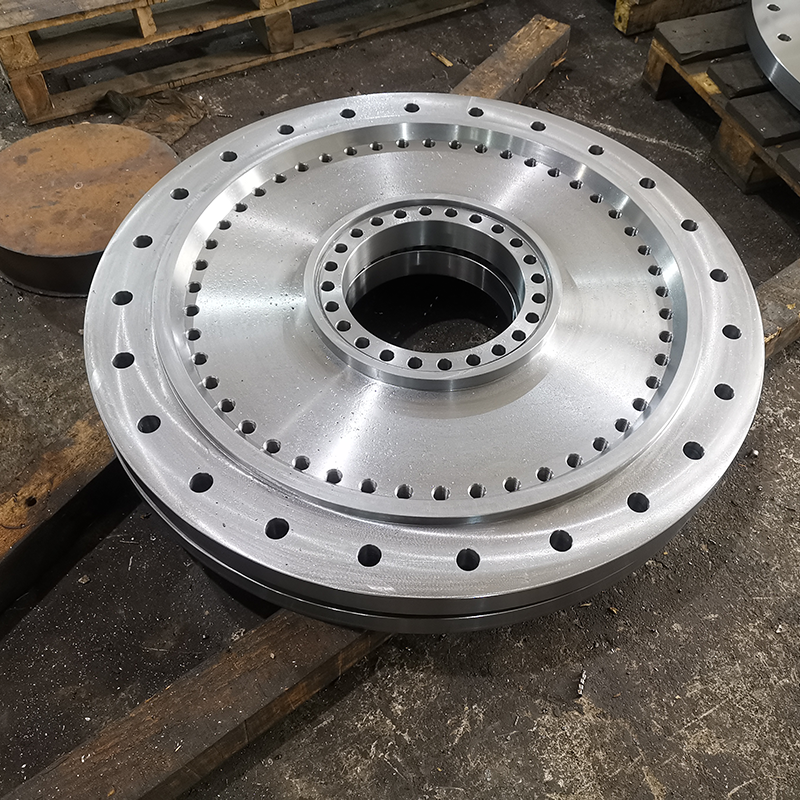
Flange Hydraulic Connectors
Flanged connectors are used for high-pressure, large-diameter hydraulic lines.
They are commonly used in:
- Mining equipment
- Hydraulic presses
- Marine systems
Flanges distribute load evenly and handle extreme pressure spikes.
Comparison of Major Hydraulic Connector Categories
| Category | Pressure Capability | Vibration Resistance | Installation Complexity | Typical System Size |
| Threaded | Medium | Moderate | Low | Small-Medium |
| ORFS | High | High | Moderate | Medium |
| Flare | High | High | Moderate | Medium-Large |
| Compression | Medium-High | High | Moderate | Precision systems |
| Flange | Very High | Very High | High | Large systems |
Materials Used in Hydraulic Connectors
Material selection determines durability, corrosion resistance, and cost.
Carbon Steel
High strength and cost-effective, but moderate corrosion resistance.
Stainless Steel
Excellent corrosion resistance for marine and chemical applications.
Brass
Used in lower-pressure systems.
Aluminum
Lightweight but lower strength.
Duplex Stainless Steel
Ideal for offshore and extreme environments.
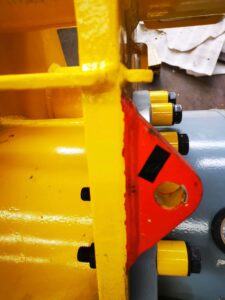
Material Performance Comparison
| Material | Strength | Corrosion Resistance | Cost Level | Best Use Case |
| Carbon Steel | High | Moderate | Low | Industrial |
| Stainless Steel | High | High | Medium | Marine |
| Brass | Medium | Moderate | Low | Low pressure |
| Aluminum | Medium | Moderate | Medium | Lightweight |
| Duplex Steel | Very High | Very High | High | Offshore |
Application Areas of Hydraulic Connectors
Construction and Heavy Equipment
High vibration and shock require ORFS or flange connectors.
Manufacturing and Automation
Precision compression fittings are preferred.
Oil & Gas
Corrosion-resistant materials are mandatory.
Renewable Energy
Wind turbine pitch control systems rely on high-integrity connectors.
Aerospace and Defense
Lightweight, high-strength connectors are essential.
Installation and Maintenance Best Practices
Improper installation accounts for a large percentage of hydraulic failures.
Key guidelines:
- Follow torque specifications
- Inspect O-rings before installation
- Avoid thread mixing
- Ensure clean mating surfaces
- Avoid misalignment
Regular inspections prevent fatigue cracking and leakage.
Emerging Trends in Hydraulic Connectors (2026 Outlook)
Smart Hydraulic Connectors
Integrated sensors monitor:
Pressure
Temperature
Leakage
Advanced Coatings
Zinc-nickel and corrosion-resistant coatings extend lifespan.
Compact High-Pressure Designs
Designed for robotics and electrified mobile machinery
Sustainable Manufacturing
Eco-friendly plating and recyclable materials are gaining traction.
FAQ: Hydraulic Connector Industry Questions
Q1: What is the most leak-resistant hydraulic connector type?
ORFS and flange connectors provide superior sealing in high-pressure and vibration conditions.
Q2: Can hydraulic connectors be reused?
Many can be reused if undamaged, though compression fittings may require ferrule replacement.
Q3: What causes connector failure?
Improper torque, vibration fatigue, corrosion, and pressure spikes are common causes.
Q4: How do I choose the right hydraulic connector?
Consider pressure rating, material compatibility, vibration environment, and maintenance access.
Q5: How often should hydraulic connectors be inspected?
Inspection frequency depends on operating conditions but typically ranges from 3 to 6 months in industrial systems.
Conclusion
The hydraulic connector plays a vital role as both a structural and sealing component in contemporary hydraulic systems. With the rise in pressure ratings and the tightening of environmental standards, connector designs have transitioned from simple mechanical fittings to advanced, reliability-engineered components.
By 2026, effective hydraulic system design demands:
- – A thorough grasp of connector operational principles
- – The selection of suitable sealing technologies
- – Careful alignment of materials with environmental conditions
- – Adherence to meticulous installation protocols
- – Integration of smart monitoring advancements
Companies that emphasize high-quality connectors and precision engineering will benefit from enhanced system uptime, increased safety standards, and lower lifecycle expenses.