

Heat exchanger tubes are the primary heat transfer elements in shell-and-tube, finned, air-cooled, and specialised heat exchangers. The most common types are plain tubes, finned tubes, U-tubes, straight tubes, corrugated tubes, and double-wall tubes. Each type is designed to optimise heat transfer, pressure resistance, corrosion protection, or maintenance requirements for specific industrial applications. According to the Heat Exchanger Design Handbook (HEDH) and Perry’s Chemical Engineers’ Handbook (9th edition), the selection of heat exchanger tubes depends on operating temperature, pressure, fluid characteristics, corrosion potential, fouling tendency, and lifecycle cost, rather than on the selection of materials alone.
As industries continue to prioritise energy efficiency, sustainability, and equipment reliability, advances in tube design and manufacturing mean that modern heat exchanger tubes are more durable and thermally efficient than ever before, and can be tailored to specific applications.
Introduction
Heat exchangers are among the most important pieces of equipment in modern industry. They enable thermal energy to be transferred efficiently between two fluids without them mixing directly, making them indispensable in sectors such as power generation, oil and gas, petrochemicals, food processing, heating, ventilation and air conditioning (HVAC), pharmaceuticals, marine engineering, renewable energy, and chemical manufacturing.
The overall performance of a heat exchanger, whether installed in a refinery, a commercial air-conditioning system, or a nuclear power plant, depends largely on one component: the heat exchanger tube.
These tubes provide the primary surface through which thermal energy flows. The geometry, material, wall thickness, surface treatment, and manufacturing quality of these tubes directly influence heat transfer efficiency, pressure drop, corrosion resistance, equipment lifespan, and maintenance costs. Even a well-designed heat exchanger can suffer from poor thermal performance or premature failure if the wrong tube type is selected.
One of the most frequently asked questions from engineers, plant managers, procurement professionals, and equipment manufacturers is:
What are the different types of heat exchanger tubes?
The answer goes beyond simply distinguishing between straight and U-shaped tubes. Today’s industrial market offers a wide range of tube designs developed to solve specific engineering challenges, including high-pressure operation, corrosive media, severe fouling, limited installation space, thermal expansion, and enhanced heat transfer requirements.
This guide explains the main types of heat exchanger tubes, compares their characteristics, discusses material selection, and provides practical recommendations for selecting the most suitable solution for different industries.
Why Heat Exchanger Tubes Are So Important?
A heat exchanger consists of several interconnected components, such as shells, tube sheets, baffles, headers, nozzles, and support structures. However, it is the tubes that account for the majority of the heat transfer area, making them the most critical element affecting thermal performance.
The role of a heat exchanger tube extends well beyond simply carrying fluids. Properly designed tubes must be able to withstand continuous exposure to pressure, thermal cycling, vibration, erosion, and chemical attack, all the while maintaining high heat transfer efficiency over many years of operation.
Key functions of heat exchanger tubes include:
- Transferring heat efficiently between process fluids.
- Withstanding high internal and external pressures.
- Resisting corrosion from aggressive chemicals or seawater.
- Minimising fouling and scaling.
- Accommodating thermal expansion.
- Supporting long-term mechanical reliability.
- Reducing maintenance frequency and operating costs.
Incorrect tube selection can result in reduced heat transfer efficiency, increased energy consumption, tube leakage, unscheduled shutdowns, and costly repairs. Consequently, selecting the correct tube type is one of the most important engineering decisions in heat exchanger design.
Factors That Differentiate Heat Exchanger Tubes
Not all heat exchanger tubes are designed for the same operating conditions. Engineers evaluate multiple performance criteria before selecting a configuration.
- Heat transfer efficiency
The primary objective of every heat exchanger tube is to maximise thermal energy transfer. Tube geometry, surface area, wall thickness, and internal flow characteristics all influence overall heat transfer performance.
- Pressure resistance
Industrial heat exchangers frequently operate under pressures ranging from a few bar to well over 200 bar. Tube design must therefore provide adequate mechanical strength while maintaining acceptable thermal conductivity.
- Corrosion resistance
Applications involving seawater, chlorides, acids, alkalis, or high-temperature oxidation require corrosion-resistant materials and tube designs that can maintain a long service life.
- Fouling resistance
Deposits of scale, sludge, biological growth, or process residues can reduce the efficiency of heat transfer. Tube designs that minimise fouling or simplify cleaning can significantly reduce maintenance costs.
- Thermal expansion
Large temperature differences between shell-side and tube-side fluids create thermal stresses. Certain tube configurations are specifically designed to accommodate expansion without excessive mechanical stress.
- Maintenance accessibility
Some heat exchanger designs prioritise easy tube inspection, cleaning, and replacement, particularly in industries where equipment downtime is extremely costly.
Main Types of Heat Exchanger Tubes
Modern heat exchangers employ several tube configurations, each optimized for specific operating environments and performance requirements.
Straight Tubes
Straight tubes are the most common configuration in shell-and-tube heat exchangers. They extend directly from one tube sheet to the other, providing a simple flow path and allowing mechanical cleaning from both ends.
Their advantages include:
- Easy manufacturing
- Simple installation
- Excellent accessibility for maintenance
- Convenient tube replacement
- Low pressure drop
Because straight tubes can be mechanically cleaned using brushes or cleaning pigs, they are widely used in industries where fouling is expected, including refineries, chemical plants, and power stations.
However, straight-tube exchangers generally require expansion joints or floating heads to accommodate thermal expansion between the shell and tube bundle.
U-Tubes
U-tube heat exchangers bend each tube into a U-shape, allowing both tube ends to be connected to the same tube sheet.
This configuration offers several engineering advantages.
First, thermal expansion is accommodated naturally by the curved tube geometry, eliminating the need for expansion joints. Second, the design reduces manufacturing complexity associated with multiple tube sheets.
Typical applications include:
- High-temperature process equipment
- Steam condensers
- Power generation
- Petrochemical processing
The primary limitation is that the inside of the bend is difficult to clean mechanically, making U-tubes less suitable for heavily fouling fluids.
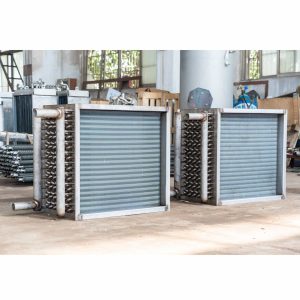
Finned Tubes
Finned tubes increase external surface area by attaching metal fins to the tube wall. The larger surface area significantly improves heat transfer, especially when one of the fluids is a gas with relatively poor thermal conductivity.
Finned tubes are commonly found in:
- Air-cooled heat exchangers
- HVAC equipment
- Power plant cooling systems
- Refrigeration units
- Waste heat recovery systems
Depending on application requirements, fins may be extruded, welded, embedded, or helically wound around the tube.
Although finned tubes improve thermal efficiency dramatically, they also require regular cleaning because dust and debris can accumulate between fins.
Corrugated Tubes
Corrugated tubes feature periodically formed internal or external ridges that disturb fluid flow and create turbulence.
Compared with smooth tubes, corrugated tubes offer:
- Higher heat transfer coefficients
- Reduced fouling tendency
- Improved mixing
- Better thermal performance under low flow conditions
These tubes are increasingly used in food processing, pharmaceutical production, and compact industrial heat exchangers, where maximizing efficiency within limited installation space is essential.
Double-Wall Tubes
Double-wall tubes consist of two concentric tube walls separated by a small gap.
This design provides an additional safety barrier that prevents cross-contamination between two process fluids.
Typical applications include:
- Pharmaceutical manufacturing
- Beverage production
- Medical equipment
- Potable water systems
- High-purity chemical processing
Because leakage between the two walls can be detected before fluids mix, double-wall tubes are widely used wherever product purity or safety is critical.
Enhanced Surface Tubes
Enhanced surface tubes are engineered with specialized internal grooves, micro-fins, dimples, or textured surfaces to improve heat transfer performance without significantly increasing equipment size.
Advantages include:
- Higher thermal efficiency
- Reduced exchanger footprint
- Lower energy consumption
- Improved boiling and condensation performance
Enhanced tubes are widely adopted in condensers, evaporators, chillers, refrigeration systems, and high-performance industrial process equipment.
Comparison of Major Heat Exchanger Tube Types
| Tube Type | Heat Transfer Performance | Cleaning Difficulty | Typical Applications | Main Advantages |
| Straight Tube | High | Easy | Refineries, power plants | Easy maintenance and replacement |
| U-Tube | High | Moderate | High-temperature services | Excellent thermal expansion capability |
| Finned Tube | Very High (gas side) | Moderate | HVAC, air coolers | Large heat transfer surface area |
| Corrugated Tube | High | Easy | Food, pharmaceuticals | Reduced fouling and improved turbulence |
| Double-Wall Tube | Medium | Moderate | Food, medical, potable water | Prevents fluid cross-contamination |
| Enhanced Surface Tube | Very High | Moderate | Condensers, evaporators | Maximum efficiency in compact equipment |
Selecting the Appropriate Tube Type
There is no universally “best” heat exchanger tube. The optimal choice depends on balancing thermal performance, operating pressure, corrosion resistance, maintenance requirements, and lifecycle cost.
For example:
Straight tubes are ideal when frequent mechanical cleaning is expected.
U-tubes perform exceptionally well under severe thermal expansion conditions.
Finned tubes maximize heat transfer in gas-to-liquid applications.
Corrugated tubes improve efficiency while reducing fouling.
Double-wall tubes prioritize process safety and contamination prevention.
Enhanced surface tubes deliver the highest thermal performance in compact systems.
Successful heat exchanger design, therefore, requires engineers to evaluate the complete operating environment rather than focusing on a single performance parameter.
Common Materials Used for Heat Exchanger Tubes
While tube geometry determines how heat is transferred, material selection largely determines how long a heat exchanger will operate efficiently. A well-designed heat exchanger tube must withstand pressure, corrosion, erosion, thermal cycling, and fouling while maintaining high thermal conductivity throughout its service life.
Selecting the wrong material can result in premature tube failure, unplanned shutdowns, product contamination, or expensive maintenance. Therefore, engineers typically evaluate operating temperature, fluid chemistry, pressure, chloride concentration, and lifecycle cost before making a final decision.
Below are the most commonly used materials for industrial heat exchanger tubes.
Carbon Steel Tubes
Carbon steel remains one of the most widely used tube materials because of its affordability, mechanical strength, and ease of fabrication.
Its primary advantages include:
- Low material cost
- High mechanical strength
- Excellent weldability
- Wide availability
- Suitable for medium-pressure applications
Carbon steel performs well in closed-loop systems with clean water or non-corrosive fluids. However, it has relatively poor corrosion resistance and is generally unsuitable for seawater, acidic media, or environments with high oxygen content unless protective coatings or corrosion inhibitors are applied.
Typical applications include:
- District heating systems
- Industrial boilers
- Oil refining
- HVAC equipment
- Steam heat exchangers
Stainless Steel Tubes
Stainless steel has become the preferred choice for many industries because it combines corrosion resistance with excellent mechanical properties.
Popular grades include:
- 304 Stainless Steel – Suitable for general industrial applications and clean water systems.
- 316/316L Stainless Steel – Improved resistance to chlorides and chemical corrosion, making it ideal for marine environments and chemical processing.
Key advantages include:
- Excellent corrosion resistance
- Long service life
- Good mechanical strength
- Hygienic surface finish
- Low maintenance requirements
Because of these characteristics, stainless steel heat exchanger tubes are widely used in food processing, pharmaceutical manufacturing, breweries, dairy equipment, chemical plants, and offshore facilities.
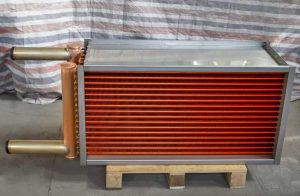
Copper and Copper Alloy Tubes
Copper has one of the highest thermal conductivities among engineering metals, making it highly effective for heat transfer applications.
Its benefits include:
- Outstanding thermal conductivity
- Excellent formability
- Natural antimicrobial properties
- Easy fabrication
- Good corrosion resistance in freshwater systems
Copper alloys such as brass and cupronickel further improve corrosion resistance while maintaining excellent heat transfer performance.
Typical applications include:
- Air conditioning systems
- Refrigeration equipment
- Condensers
- Water-cooled chillers
- Marine cooling systems (using cupronickel)
However, copper is generally not recommended for highly acidic or ammonia-containing environments.
Titanium Tubes
Titanium is recognized as one of the most corrosion-resistant metals available for heat exchanger service.
Its exceptional resistance to seawater, chlorides, and aggressive chemicals makes titanium the preferred material for harsh operating environments.
Advantages include:
- Outstanding corrosion resistance
- High strength-to-weight ratio
- Excellent resistance to seawater
- Long operating life
- Minimal maintenance
Although titanium tubes have a higher initial cost, their long lifespan often results in lower total lifecycle costs, particularly in desalination plants, offshore platforms, and power station condensers.
Nickel Alloy Tubes
Nickel-based alloys, including Inconel®, Hastelloy®, and Monel®, are designed for extremely demanding applications involving high temperatures, strong acids, or aggressive chemicals.
These alloys offer:
- Excellent oxidation resistance
- Superior high-temperature strength
- Outstanding corrosion resistance
- Long-term structural stability
Nickel alloy heat exchanger tubes are commonly used in:
- Petrochemical plants
- Fertilizer production
- Nuclear power
- Aerospace manufacturing
- Chemical processing
Because of their premium performance, they are generally selected only when conventional stainless steels cannot meet operating requirements.
Duplex Stainless Steel Tubes
Duplex stainless steels combine the advantages of austenitic and ferritic stainless steels.
Compared with conventional stainless steel, duplex grades provide:
- Higher mechanical strength
- Better chloride resistance
- Improved stress corrosion cracking resistance
- Longer service life
- Reduced wall thickness requirements
Duplex tubes are increasingly used in offshore oil and gas production, desalination facilities, marine engineering, and chemical processing plants where both strength and corrosion resistance are essential.
Comparison of Common Heat Exchanger Tube Materials
| Material | Thermal Conductivity | Corrosion Resistance | Mechanical Strength | Relative Cost | Typical Applications |
| Carbon Steel | Moderate | Low | High | Low | Boilers, industrial heating |
| Stainless Steel 304 | Moderate | Good | High | Medium | Food, HVAC, water systems |
| Stainless Steel 316L | Moderate | Excellent | High | Medium-High | Marine, chemicals |
| Copper | Excellent | Good | Moderate | Medium | Refrigeration, condensers |
| Cupronickel | Very Good | Excellent | Moderate | High | Seawater cooling |
| Titanium | Moderate | Outstanding | High | Very High | Desalination, offshore |
| Nickel Alloys | Moderate | Outstanding | Very High | Very High | Petrochemical, nuclear |
| Duplex Stainless Steel | Moderate | Excellent | Very High | High | Offshore, chemical plants |
How to Choose the Right Heat Exchanger Tube?
Choosing the correct heat exchanger tube involves much more than selecting a material with the highest thermal conductivity. A successful design balances thermal performance, durability, maintenance requirements, and total ownership cost.
The following factors should always be evaluated.
- Operating Temperature
High-temperature applications require materials that maintain mechanical strength and resist oxidation. Carbon steel may perform adequately in moderate conditions, while stainless steel, nickel alloys, or titanium become necessary as temperatures increase.
- Working Pressure
High-pressure systems demand tubes with excellent mechanical strength and dimensional stability. Tube wall thickness, manufacturing quality, and applicable design codes (such as ASME) must also be considered.
- Corrosive Environment
Fluid chemistry has a direct impact on material selection. Seawater, chlorides, acids, alkalis, and sulfur compounds can rapidly degrade unsuitable materials. Selecting corrosion-resistant alloys often provides the lowest lifecycle cost despite a higher initial investment.
- Fouling Potential
Some process fluids tend to deposit scale, sludge, or biological growth on tube surfaces. In these situations, engineers may prefer straight tubes for easier mechanical cleaning or enhanced-surface tubes designed to reduce fouling.
- Maintenance Accessibility
Facilities that require frequent cleaning or inspection should prioritize tube designs that simplify maintenance. Easy access can significantly reduce downtime and operating expenses over the life of the equipment.
- Budget and Lifecycle Cost
While initial purchase price is important, the total cost of ownership—including maintenance, energy consumption, replacement frequency, and downtime—often has a much greater influence on long-term project economics.
Industry Applications of Heat Exchanger Tubes
Different industries have unique operating conditions that influence tube selection.
- Oil and Gas
Refineries and petrochemical plants often process high-pressure, high-temperature, and corrosive fluids. Stainless steel, duplex stainless steel, and nickel alloys are commonly selected for their durability and corrosion resistance.
- Power Generation
Power plants require heat exchanger tubes capable of withstanding continuous thermal cycling and high operating pressures. Carbon steel is frequently used in boiler systems, while stainless steel and titanium are preferred for condensers and cooling circuits.
- HVAC and Refrigeration
Air-conditioning systems prioritize thermal conductivity and energy efficiency. Copper and copper-alloy tubes remain the industry standard because they transfer heat efficiently and are easy to manufacture.
- Food and Beverage
Strict hygiene standards require smooth, corrosion-resistant tube surfaces. Stainless steel 304 and 316L dominate this sector because they are easy to clean and comply with sanitary regulations.
- Marine Engineering
Seawater presents one of the most aggressive operating environments for heat exchangers. Titanium and cupronickel tubes provide excellent resistance to chloride corrosion and biofouling, making them ideal for marine cooling systems.
- Chemical Processing
Chemical plants often handle aggressive acids, alkalis, and solvents. Material selection depends on the specific process medium, with stainless steel, duplex stainless steel, titanium, and nickel alloys commonly employed.
Frequently Asked Questions (FAQ)
- What is the most common type of heat exchanger tube?
Straight tubes are the most widely used because they are easy to manufacture, inspect, mechanically clean, and replace. They are commonly found in shell-and-tube heat exchangers used in refineries, power plants, and chemical processing facilities.
- Which material is best for a heat exchanger tube?
There is no universal “best” material. Carbon steel offers excellent strength at low cost, stainless steel provides superior corrosion resistance, copper delivers outstanding thermal conductivity, while titanium and nickel alloys are preferred for highly corrosive or demanding environments.
- Why are U-tubes used in heat exchangers?
U-tubes naturally accommodate thermal expansion because the curved geometry allows the tubes to expand and contract without placing excessive stress on the tube sheets. This makes them ideal for high-temperature applications.
- When should finned tubes be used?
Finned tubes are most effective when one of the heat transfer media is a gas, such as air. The additional surface area greatly improves heat transfer efficiency in air-cooled heat exchangers, HVAC equipment, and waste heat recovery systems.
- How long does a heat exchanger tube typically last?
Service life depends on operating conditions, material selection, water quality, and maintenance practices. Under favorable conditions, stainless steel or titanium heat exchanger tubes can operate reliably for 20 years or more.
- How can fouling in heat exchanger tubes be reduced?
Fouling can be minimized through proper water treatment, filtration, maintaining appropriate fluid velocity, selecting fouling-resistant tube designs, and performing regular mechanical or chemical cleaning before deposits become severe.
Conclusion
Selecting the right heat exchanger tube is one of the most important decisions in the design process because the tube’s geometry and material directly affect thermal efficiency, pressure resistance, corrosion performance, maintenance requirements, and total lifecycle cost.
Modern industries can choose from a wide variety of tube configurations, including straight, U-, finned, corrugated, double-wall, and enhanced surface tubes, each of which is designed to address specific operational challenges. Similarly, materials such as carbon steel, stainless steel, copper alloys, titanium, duplex stainless steel, and nickel alloys can be used to create solutions tailored to different temperatures, pressures, and corrosive environments.
Rather than focusing solely on the initial purchase cost, engineers should consider the entire operating environment, anticipated maintenance needs, energy efficiency, and long-term reliability. Carefully selecting heat exchanger tubes improves heat transfer performance, reduces downtime, lowers maintenance costs, extends equipment service life, and enhances overall process efficiency.
As industrial systems continue to emphasise sustainability, digital monitoring and energy optimisation, advances in tube materials, surface enhancement technologies and intelligent maintenance strategies will further improve the performance and reliability of future heat exchanger systems.