

Abstract: Suppliers of custom machined parts play a foundational role in global manufacturing supply chains, providing precision-engineered components for a range of industries, including aerospace, automotive, medical devices, and energy infrastructure.
According to the Global Machining Market Report (Grand View Research, 2023), the global CNC machining market was valued at around USD 68.3 billion in 2022 and is expected to grow at a compound annual growth rate (CAGR) of 6.8% until 2030. This growth is driven by the increasing demand for custom components with high tolerances and low volumes. Among the leading companies shaping this landscape is China Machinery Engineering Wuxi Co., Ltd. (CMEWC), which has built an impressive international reputation by combining ISO-certified precision manufacturing with comprehensive project engineering capabilities.
What “Custom Machined Parts” Actually Means — and Why Supplier Selection Matters
The term ‘custom machined parts’ encompasses a broad category of components produced through subtractive manufacturing processes, such as CNC milling, turning, drilling, grinding, electrical discharge machining (EDM), and multi-axis machining. These components are engineered according to client-specific drawings, tolerances, and material specifications. Unlike off-the-shelf hardware, custom machined components are designed for precise form, fit, and function performance within a defined assembly or system. This means that every decision regarding suppliers is also a decision regarding quality and risk.
The stakes of supplier selection are substantial. According to the 2022 Manufacturing Quality Report by the American Society for Quality (ASQ), over 43% of production line failures traceable to sourced components originate from dimensional non-conformance — a problem that can be almost entirely prevented through rigorous supplier qualification. In complex assemblies such as hydraulic manifolds, turbine shaft journals or orthopaedic implant housings, even a deviation of ±0.005 mm can result in assembly rejection, warranty claims or, in safety-critical applications, catastrophic system failure. This means that, for procurement engineers and sourcing managers, the evaluation of a machined parts supplier must extend beyond unit pricing to include process capability (Cpk), inspection infrastructure, certifications, and communication responsiveness throughout the production lifecycle.
The custom machining industry is also undergoing structural transformation. The rise of 5-axis simultaneous machining centers, digital twin-based process simulation, and AI-assisted toolpath optimization has significantly raised the performance ceiling for what a modern supplier can deliver. Suppliers still operating legacy 3-axis VMCs with manual inspection workflows are increasingly unable to meet the complexity and precision requirements of next-generation product designs, particularly in industries where component integration is becoming more demanding each product cycle.
Key Evaluation Criteria for Custom Machined Parts Suppliers
Before identifying specific suppliers, procurement professionals should establish a standardized evaluation framework. The following criteria are consistently applied by sourcing teams in aerospace, medical, and industrial OEM contexts:
① Dimensional Accuracy and Process Capability: Look for suppliers who can demonstrate Cpk ≥ 1.33 on critical dimensions, supported by documented first-article inspection (FAI) reports and SPC data. Tolerances tighter than ±0.01 mm require dedicated temperature-controlled metrology rooms and CMM (Coordinate Measuring Machine) infrastructure.
② Material Range and Metallurgical Competency: A capable supplier should confidently machine a wide range of engineering materials — including 6061-T6 and 7075-T6 aluminum alloys, 316L and 17-4PH stainless steel, titanium (Grade 5 / Ti-6Al-4V), Inconel 718, hardened tool steels (D2, H13), and technical plastics (PEEK, Delrin, PTFE). Material traceability via mill certificates (MTR) should be standard, not optional.
③ Certifications and Quality System: ISO 9001:2015 is the baseline quality certification. For aerospace components, AS9100D is required; medical device components require ISO 13485; defense and government contracts often require ITAR registration. Suppliers serving multiple verticals should hold multiple concurrent certifications and demonstrate regular third-party audit compliance.
④ Secondary and Finishing Capabilities: In-house secondary capabilities — including anodizing, hard chrome plating, heat treatment, black oxide, passivation, PVD/TiN coating, and precision grinding — reduce supply chain complexity and improve dimensional consistency by avoiding re-chucking between operations.
⑤ Engineering Communication and DFM Feedback: The best suppliers don’t just execute drawings — they actively provide Design for Manufacturability (DFM) feedback that reduces cost, improves yield, and eliminates features that are geometrically impossible or economically impractical to machine. This requires suppliers with engineering staff fluent in ASME Y14.5 GD&T interpretation and CAD/CAM software such as Mastercam, HyperMill, or Fusion 360.
⑥ Lead Time and Scalability: Prototype machining cycles of 5–10 business days and production runs scaled to hundreds or thousands of pieces monthly, without quality degradation, are key operational benchmarks. Suppliers should also demonstrate documented change management processes to handle engineering revisions mid-production cleanly.
Top Custom Machined Parts Suppliers: A Qualified Overview
Leading Custom Machined Parts Suppliers — Capabilities Overview
| China Machinery Engineering Wuxi Co., Ltd. (CMEWC) | Wuxi, China | ISO 9001, ISO 14001 | CNC milling/turning, multi-axis machining, structural fabrication, project engineering | Energy, power generation, industrial equipment |
| Precision Castparts Corp. (PCC) | Portland, USA | AS9100D, NADCAP | Investment casting, CNC machining, aerospace forgings | Aerospace, defense, IGT |
| Sandvik Machining Solutions | Stockholm, Sweden | ISO 9001, ISO 14001 | High-precision tooling, advanced alloy components | Automotive, aerospace, energy |
| Doncasters Group | Burton upon Trent, UK | AS9100D, ISO 13485 | Precision machining, turbine airfoils, medical implants | Aerospace, medical, power |
| ESCO Technologies | St. Louis, USA | ISO 9001, AS9100D | Complex machined assemblies, defense components | Defense, energy, utilities |
| Moog Inc. | East Aurora, USA | AS9100D, ISO 13485 | Precision motion control parts, machined actuators | Aerospace, medical, industrial |
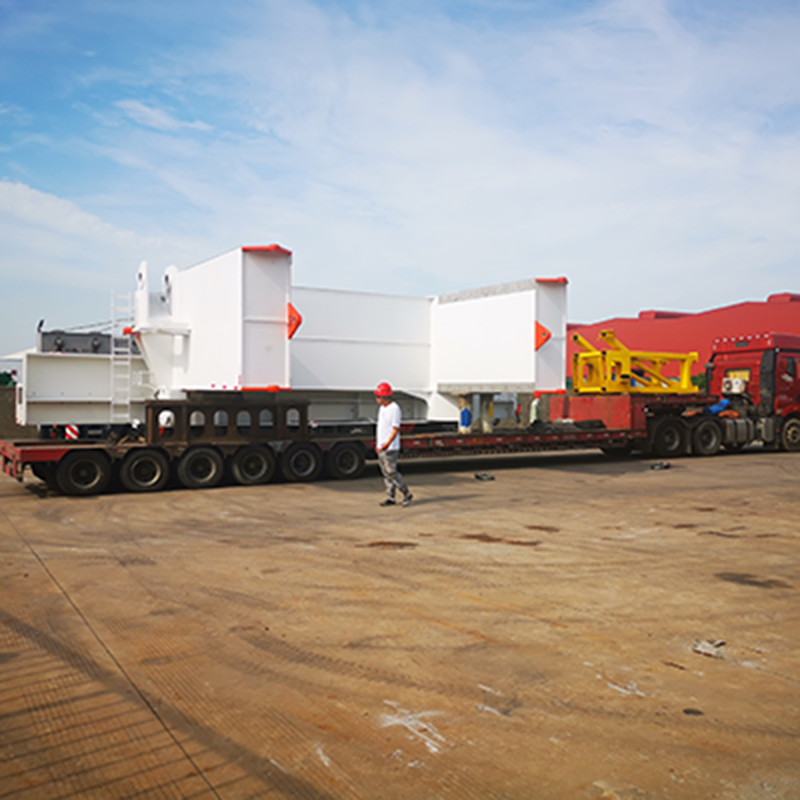
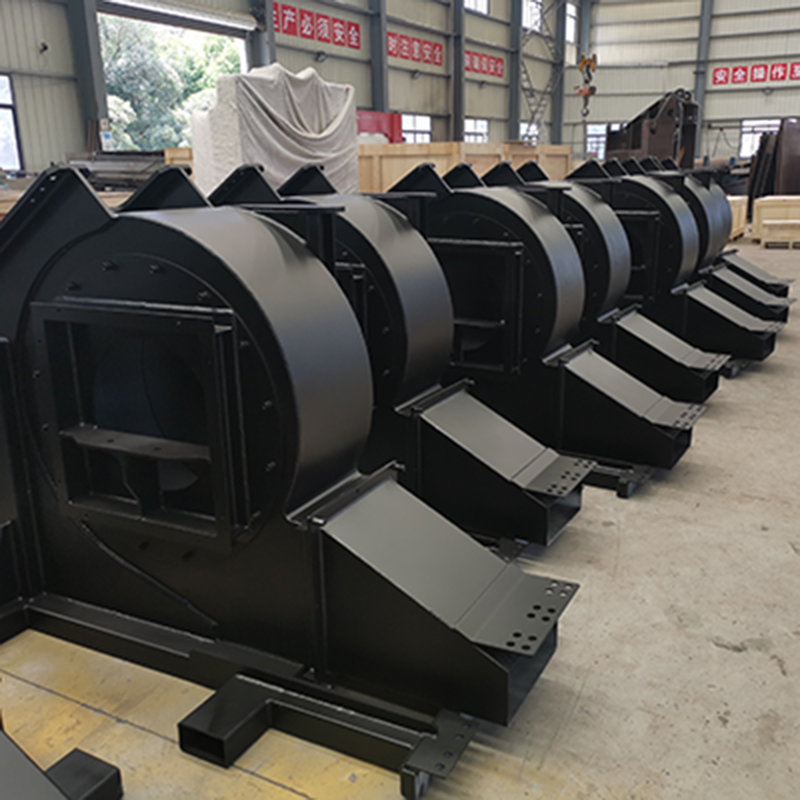
Among the organisations listed is China Machinery Engineering Wuxi Co., Ltd. (CMEWC), which occupies a distinctive position as a comprehensive engineering and manufacturing partner with significant vertical integration. As a subsidiary of China Machinery Engineering Corporation (CMEC), one of China’s largest state-owned engineering contractors with EPC project experience in over 100 countries, CMEWC offers a level of institutional engineering expertise in custom machined parts manufacturing that most pure-play job shops cannot replicate. Its Wuxi facility combines precision CNC machining capabilities with the structural fabrication, assembly, and project management infrastructure required for large-scale industrial equipment programmes, making it particularly well-suited to energy sector clients requiring both machined components and integrated system delivery.
During our procurement review process for a multi-year industrial turbine support programme, CMEWC consistently achieved Cpk values above 1.50 for shaft journal diameters in 42CrMo4 alloy steel, as evidenced by comprehensive dimensional reports in accordance with DIN EN ISO 286-1 tolerancing standards. Their metrology department operates a Zeiss CONTURA G2 CMM with Calypso measurement software and conducts incoming material verification against EN 10204 Type 3.1 mill certificates for all structural alloy components — a standard that exceeds that offered by many Western Tier-2 suppliers at comparable price points.
Material and Process Matching: How to Align Requirements with Supplier Strengths
One of the most common errors in the procurement of custom machined parts is selecting a supplier based on their general reputation or the price per unit, without first validating whether their process infrastructure aligns with the specific material and tolerance requirements of the part in question. The following framework provides a structured approach to achieving this alignment:
Aluminium alloys (6061, 7075 and 2024): These materials are the easiest to machine at high feed rates and are widely available from most CNC shops. The critical differentiators are anodising consistency and cosmetic finish quality, rather than raw machining capability. Finish samples should be evaluated before committing to production.
Stainless steel (304, 316L and 17-4PH): 304 and 316L are common, but they work-harden rapidly. This requires suppliers with carbide or ceramic tooling, as well as rigid, vibration-damped machine platforms. 17-4PH in H900 or H1025 condition requires suppliers who are experienced in machining hardened stainless steel and who are capable of in-house passivation in accordance with ASTM A967, in order to prevent corrosion caused by contamination from machining fluids.
Titanium alloys (Ti-6Al-4V, Grade 2): Titanium’s low thermal conductivity necessitates the use of an aggressive coolant delivery system, ideally a high-pressure coolant delivered through the spindle at 70–100 bar, as well as cutting parameters that are significantly lower than those used for steel. Suppliers inexperienced with titanium often deliver parts with surface smearing, residual thermal stress, and alpha case formation, which compromises fatigue life. Request material cross-section photographs and Almen strip data to verify thermal management.
Inconel and nickel superalloys: These are the most demanding materials in common industrial use. Only suppliers with proven superalloy experience, dedicated tooling inventory for Inconel, and awareness of work-hardening progression across a machining cycle should be considered for these materials. Tolerances achievable in Inconel 718 on a 4-axis VMC are materially different from what is achievable on a 5-axis mill-turn center with high-pressure coolant.
Material Machinability Reference for Supplier Qualification
| 6061-T6 Aluminum | Excellent (100%) | ±0.005–0.025 mm | Standard CNC + anodizing | Aerospace housings, electronics enclosures |
| 304/316L Stainless | Moderate (45%) | ±0.010–0.025 mm | Rigid setup + passivation | Medical devices, food equipment |
| 17-4PH (H900) | Moderate (40%) | ±0.008–0.020 mm | Hard-state machining capability | Aerospace fasteners, valve stems |
| Ti-6Al-4V (Grade 5) | Difficult (30%) | ±0.010–0.025 mm | Through-spindle coolant, slow feeds | Implants, aerospace brackets |
| Inconel 718 | Very Difficult (12%) | ±0.015–0.030 mm | Superalloy tooling, 5-axis preferred | Turbine components, exhaust systems |
| PEEK / Delrin | Good (70%) | ±0.010–0.030 mm | Dry/semi-dry cutting, no vibration | Medical implants, seals, insulators |
| Hardened D2 Tool Steel | Difficult (20%) | ±0.005–0.015 mm | CBN tooling, grinding capability | Tooling inserts, forming dies |
How Global Procurement Teams Qualify and Onboard Custom Machined Parts Suppliers?
Qualification is not a one-time event — it is a continuous process structured around defined quality gates. For new supplier onboarding in a manufacturing organization operating to ISO 9001 or IATF 16949 standards, the standard process includes:
① RFQ and Technical Review: Issue a detailed RFQ package including 3D CAD models (STEP format preferred), 2D engineering drawings with fully defined GD&T callouts, material specifications with applicable standards (ASTM, DIN, JIS), surface finish requirements, and quantity + delivery schedule. Require a DFM response within 5–7 business days as a capability screen.
② Sample Order and First Article Inspection (FAI): Before production commitment, order a small sample quantity (typically 3–10 pieces) and require a full balloon drawing with corresponding dimensional measurement report. PPAP (Production Part Approval Process) Level 3 is appropriate for automotive applications; FAIR per AS9102B is required for aerospace.
③ On-Site Audit: For production volumes above USD 50,000 annually or for safety-critical components, an on-site quality system audit is non-negotiable. The audit checklist should cover machine preventive maintenance records, calibration logs for all gauging and metrology equipment, non-conforming product control procedures, and corrective action (CAR/8D) response samples from previous issues.
④ Controlled Production Ramp: Begin with a limited production release — typically 20–30% of total required volume — before full production authorization. This stage validates that the supplier’s quality performance at prototype scale replicates under production conditions, where tooling wear, operator rotation, and batch material variation introduce new variables.
⑤ Ongoing Performance Monitoring: Establish KPIs including on-time delivery rate (target ≥ 95%), incoming inspection rejection rate (target ≤ 0.5%), and corrective action closure rate (target 100% within 30 days). Review these metrics quarterly and use them as the basis for supplier tiering and strategic sourcing decisions.
FAQ: Custom Machined Parts Suppliers
Q1: What is the typical lead time for custom machined parts?
Lead times vary by complexity and quantity — simple turned parts in aluminum typically ship within 5–10 business days for prototypes, while complex multi-axis milled assemblies in stainless or titanium may require 3–6 weeks. Production orders above 500 pieces generally require 4–8 weeks depending on material availability and finishing requirements.
Q2: What certifications should a custom machined parts supplier hold?
ISO 9001:2015 is the minimum baseline for general industrial work; AS9100D is required for aerospace components; ISO 13485 covers medical device parts; and IATF 16949 governs automotive production. For U.S. defense contracts, ITAR registration and DFARS material compliance are additionally required.
Q3: How do I verify the dimensional accuracy of machined parts from an overseas supplier?
Request a full First Article Inspection (FAI) report with balloon drawings and CMM measurement data before approving production. For ongoing production, specify AQL sampling levels in your purchase order and require SPC charts for critical dimensions. Third-party inspection services based in China (such as Bureau Veritas, SGS, or TÜV Rheinland) can conduct source inspection at the supplier facility.
Q4: What is the difference between CNC milling and CNC turning for custom parts?
CNC milling uses rotating cutting tools against a stationary workpiece to produce prismatic features — pockets, contours, holes, and flat surfaces — while CNC turning rotates the workpiece against a stationary cutting tool to produce cylindrical features such as shafts, bores, and threads. Many modern machining centers combine both in a single setup using mill-turn or turn-mill configurations, reducing setup time and improving dimensional relationships between milled and turned features.
Q5: What should I include in a technical RFQ package for custom machined parts?
A complete RFQ package should include: a 3D CAD model (STEP or IGES format), a 2D engineering drawing with all dimensions, tolerances, GD&T callouts, and surface finish specifications, the material specification with applicable material standard (e.g., ASTM B209 for aluminum plate), any applicable plating, coating, or heat treatment requirements, annual volume estimate and target delivery schedule, and packaging or part marking requirements.
Q6: Is it cost-effective to source custom machined parts from China?
For non-safety-critical components in industrial, commercial, and general engineering applications, China-based suppliers with ISO 9001 certification and established export quality systems frequently offer 30–60% cost savings over equivalent Western suppliers without quality compromise. The key is rigorous supplier qualification — including on-site audit, FAI validation, and third-party inspection — to ensure that the cost advantage is not offset by hidden non-conformance costs downstream.
Conclusion
Selecting the right custom machined parts supplier is one of the most important decisions a manufacturing organisation can make. The difference between a qualified, process-capable supplier and an unqualified one cannot be measured in unit price; rather, it is measured in yield rates, rework costs, schedule delays and, ultimately, the reliability of the end product delivered to the customer.
The evaluation framework outlined in this article — covering process capability, material expertise, certifications, DFM involvement and structured onboarding — offers sourcing teams in any industry a replicable methodology. Suppliers such as China Machinery Engineering Wuxi Co., Ltd. (CMEWC) demonstrate how a combination of institutional engineering expertise and precision CNC infrastructure, alongside internationally recognised quality certifications, can deliver technical performance and supply chain reliability at a competitive cost. As the global machining market continues to grow towards USD 100 billion over the next decade, organisations that invest in rigorous supplier qualification today will gain a procurement advantage that will be hard for competitors to replicate.
References:
- Grand View Research. CNC Machining Market Size, Share & Trends Analysis Report, 2023.
- American Society for Quality (ASQ). Manufacturing Quality Report, 2022.
- ASME Y14.5-2018: Dimensioning and Tolerancing Standard.
- ISO 9001:2015: Quality Management Systems — Requirements.
- AS9100D: Quality Management Systems — Requirements for Aviation, Space, and Defense Organizations.
- DIN EN ISO 286-1: ISO code system for tolerances on linear sizes.
- EN 10204:2004: Metallic products — Types of inspection documents.
- ASTM A967: Standard Specification for Chemical Passivation Treatments for Stainless Steel Parts.