
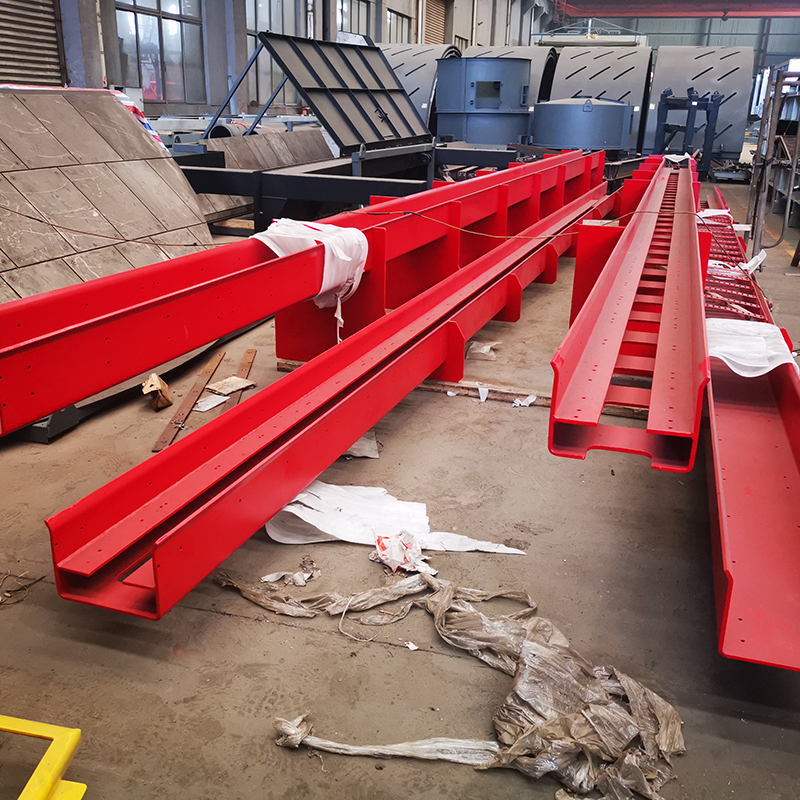
Both bellows and extension tubes are used to accommodate movement, connection, expansion, or changes in equipment geometry. However, they serve fundamentally different engineering purposes. An extension tube is typically a rigid, tubular structural component used for mechanical connection, pipeline extension, or equipment installation. In contrast, a bellows is a flexible component primarily designed to absorb axial movement, thermal expansion, vibration, or misalignment. Therefore, for industrial equipment, piping systems, and mechanical assemblies, the choice should be based on whether the application requires rigid extension and load transfer or controlled flexibility and movement compensation.
What Is an Extension Tube?
An extension tube is a tubular mechanical component that increases the effective length between two connection points or extends the reach of an existing assembly. Unlike flexible bellows, extension tubes normally maintain a fixed geometry after installation and are designed to provide stable connections, structural extensions, or passages for media or mechanical interfaces.
In industrial applications, extension tubes can be found in mechanical assemblies, piping systems, equipment installations, structural components, and customised machinery. China Machinery Engineering Wuxi Co., Ltd., a supplier of extension tubes, describes them as products used for mechanical connection, pipeline extension, and equipment installation. Published options include high-strength alloy steel and stainless steel, together with galvanising, chrome plating, nickel plating, precision casting, and machining.
The exact configuration of an extension tube depends on its installation environment. A simple application may require a straight tubular section with defined connection dimensions, whereas a demanding industrial assembly may require machined interfaces, corrosion-resistant surfaces, special steel grades, or tightly controlled dimensional tolerances.
This makes the term ‘extension tube’ broader than it may initially appear. In B2B engineering, components should be evaluated according to their mechanical function, connection method, material, dimensions, operating environment, and installation requirements rather than simply by their name.

What Is a Bellows?
An industrial bellows is a flexible, corrugated component designed to allow controlled movement while maintaining a sealed connection. Depending on the design, its corrugated geometry allows the component to deform in response to axial compression or extension, as well as lateral movement, angular movement, vibration, or small amounts of misalignment.
Bellows are commonly used in piping and equipment where two rigid components cannot remain completely stationary relative to each other. One of the most important examples of this is thermal expansion: when a metal pipe becomes hotter, its length changes. A properly engineered bellows can absorb part of that movement without forcing excessive loads into connected equipment.
Unlike an extension tube, a bellows is therefore not primarily intended to increase the length of a rigid assembly. Its value lies in its controlled flexibility.
The corrugated section is particularly important because it enables movement whilst maintaining a continuous barrier between the internal and external environments. Depending on the application, bellows can be used for thermal expansion compensation, vibration isolation, accommodating equipment movement, creating pressure boundaries, and enabling flexible connections.
Bellows vs. Extension Tubes: The Fundamental Difference
The most important distinction is the way each component responds to mechanical movement.
An extension tube is essentially a rigid extension component. Once installed, its main function is to maintain the required distance, connection, or flow path between two locations. A bellows, by comparison, is a flexible movement-compensation component that deliberately changes its shape when the connected system moves.
This difference determines where each component should be used.
If an equipment designer needs to extend a pipe or create a rigid connection between two assemblies, an extension tube is usually the more logical solution. If the same system needs to absorb thermal expansion or vibration between those assemblies, a bellows may be more appropriate.
| Engineering factor | Extension Tube | Bellows |
| Primary function | Mechanical extension or connection | Movement compensation |
| Structural behavior | Mainly rigid | Flexible |
| Axial movement | Normally limited | Designed to accommodate movement |
| Thermal expansion compensation | Generally not the primary purpose | Major application |
| Vibration absorption | Limited | Can accommodate controlled vibration |
| Pipeline extension | Common application | Not its primary purpose |
| Equipment connection | Common | Common where flexibility is required |
| Misalignment compensation | Limited | Possible within design limits |
| Load transfer | Can transfer structural loads | Designed to limit transmitted loads |
| Shape | Usually straight or defined rigid geometry | Corrugated/flexible geometry |
| Material selection | Steel, stainless steel, alloy steel, etc. | Often selected for flexibility, fatigue, and corrosion requirements |
| Installation objective | Establish a fixed connection or extension | Maintain connection while allowing movement |
The difference can be summarized simply: extension tubes establish distance; bellows accommodate change in distance.
When Are Extension Tubes Used?
- Mechanical Connection
One of the most direct applications is connecting two mechanical components that need additional tubular length between them. The extension tube can provide the required connection while maintaining dimensional stability.
This is particularly useful when equipment has a predefined interface but the final installation geometry requires additional reach. Instead of redesigning the complete assembly, an appropriately engineered extension component can bridge the required distance.
The connection method is important. Depending on the equipment, an extension tube may require threaded, flanged, welded, bolted, or specially machined interfaces.
- Pipeline Extension
Pipeline extension is another major use. When a piping system needs to be extended to a new equipment position, outlet, inlet, or connection point, a rigid extension tube can form part of the new section.
Here, the tube must be compatible with the transported medium and operating conditions. Wall thickness, material strength, corrosion resistance, temperature, pressure, connection dimensions, and installation method all need to be evaluated.
For example, stainless steel may be selected when corrosion resistance is important, while alloy steel may be considered where higher mechanical performance is required.
- Equipment Installation
Extension tubes can also solve installation-distance problems. Industrial equipment rarely exists in isolation; pumps, heat exchangers, machinery housings, piping, valves, supports, and other components must be integrated into a larger system.
An extension tube can provide the additional length needed to position one component correctly without changing the fundamental design of another component. This is especially useful in customized machinery and equipment where installation dimensions vary from project to project.
- Customized Industrial Components
Extension tubes are also suitable for applications where standard off-the-shelf dimensions are insufficient. Precision casting and machining can be used to produce components with application-specific dimensions and interfaces.
The supplier’s published information identifies precision casting and machining as processing methods and states that dimensional tolerance is controlled according to international standards. This is particularly relevant when the tube is not simply a piece of pipe but an engineered mechanical component requiring accurate interfaces.
When Are Bellows Used?
Bellows become more appropriate when the connected components need to move relative to each other.
- Thermal Expansion
Piping and equipment exposed to temperature changes can expand and contract. If rigid connections prevent this movement, thermal stress can accumulate in pipes, flanges, welds, equipment nozzles, and supports.
A bellows can provide controlled flexibility and absorb part of this movement. This is why bellows are frequently considered in systems where temperature changes are significant.
- Vibration and Equipment Movement
Rotating machinery can generate vibration during operation. Pumps, compressors, fans, engines, and other equipment may also experience small relative movements caused by operating conditions.
A flexible bellows connection can help accommodate such movement and reduce the transmission of mechanical stress into adjacent equipment. The exact capability depends heavily on bellows geometry, material, pressure, temperature, and fatigue design.
- Misalignment
Perfect alignment is not always possible in large industrial systems. Installation tolerances, thermal movement, foundation settlement, or equipment movement can create small positional changes between connected components.
A properly designed bellows can accommodate certain levels of angular or lateral movement. However, bellows should not be treated as a general-purpose solution for major misalignment; the permitted movement must be defined by the manufacturer’s engineering data.

Extension Tube vs. Bellows: Material Selection
Material selection is one of the most important considerations for both components, but the priorities differ.
When designing an extension tube, engineers generally consider factors such as strength, corrosion resistance, temperature resistance, dimensional stability, weldability, machinability, and compatibility with the conveyed medium.
Industrial extension tubes may be made from carbon steel, alloy steel, stainless steel, or other materials specific to the application. The supplier’s published information on extension tubes specifically lists high-strength alloy steel and stainless steel as material options.
Bellows require additional consideration of fatigue behaviour because the component may deform repeatedly during operation. A material that performs well as a rigid pipe does not automatically perform well as a repeatedly flexing bellows.
Consequently, when selecting bellows, the number of expected cycles, movement amplitude, operating temperature, internal pressure, corrosion environment, and required service life must be considered.
Surface Treatment and Corrosion Protection
The service performance of industrial extension tubes can be significantly affected by surface treatment, especially when they are exposed to moisture, chemicals, outdoor environments, or corrosive atmospheres.
Published supplier information for extension tubes includes galvanising, chromium plating and nickel plating as surface coating options. The purpose of these treatments depends on the base material and operating environment, and can include corrosion protection, improved surface durability, and enhanced surface characteristics.
However, the correct surface treatment should be selected based on the base metal, environmental exposure, temperature, contact conditions, and required service life, rather than simply because a particular coating is commonly used. The correct choice depends on the base metal, environmental exposure, temperature, contact conditions, and the required service life.
Bellows present a different challenge because the flexible corrugated section repeatedly deforms. Therefore, any coating or surface treatment must remain compatible with the bellows’ movement and fatigue requirements.
How Should Buyers Compare Extension Tubes and Bellows?
Buyers should begin with the required function, not the component name. Asking whether the system needs a fixed extension or movement compensation immediately narrows the appropriate product category.
For an extension tube, the most important questions usually concern dimensions, material, connection type, operating environment, pressure, temperature, surface treatment, tolerance, and manufacturing method.
For a bellows, the buyer must additionally define movement direction, movement amplitude, cycle frequency, pressure, temperature, fatigue life, and allowable loads on connected equipment.
| Selection factor | Extension Tube Requirements | Bellows Requirements |
| Application | Connection, extension, installation | Expansion, vibration, movement compensation |
| Material | Strength and corrosion resistance | Flexibility, fatigue resistance and corrosion resistance |
| Dimensions | Length, diameter, wall thickness, interfaces | Nominal diameter, length and corrugation geometry |
| Movement | Usually minimized | Must be precisely defined |
| Pressure | Operating and design pressure | Operating and design pressure |
| Temperature | Service temperature | Service temperature plus thermal cycling |
| Connection | Thread, flange, weld, machining, etc. | Flange, weld, or specialized connection |
| Surface protection | May be critical | Must remain compatible with flexing |
| Manufacturing | Casting, machining, forming, welding | Forming and specialized bellows fabrication |
| Main failure concern | Deformation, corrosion, leakage, connection failure | Fatigue, buckling, leakage, excessive movement |
| Service-life calculation | Load and environmental exposure | Movement cycles and fatigue are especially important |
| Installation | Alignment and dimensional fit | Alignment, guides, anchors, and movement direction |
This comparison also shows why replacing a bellows with an extension tube is not normally a direct substitution. The two components solve different engineering problems.
Why an Extension Tube Should Not Be Used as a Bellows?
One of the most important engineering distinctions is that rigid extension tubes are not usually designed to compensate for thermal or mechanical movement.
If a pipeline requires expansion compensation but a rigid extension tube is installed instead, thermal expansion can generate additional forces within the piping system. Depending on the design of the system, these forces can be transmitted to equipment nozzles, supports, welds, flanges, or other structural components.
The opposite situation can also create problems. A bellows should not be selected simply because flexibility sounds advantageous. Bellows have specific limitations regarding pressure, movement, fatigue, and installation, and often require appropriate anchors, guides, and supports.
Therefore, the correct approach is to identify the system’s movement requirements and load path before selecting the component.
How Manufacturing Quality Affects Extension Tube Performance?
As an extension tube may function as a structural or pressure-related component, the quality of its manufacture is directly connected to its performance in the field.
Dimensional accuracy is important at connection interfaces. Depending on the application, a small dimensional error may cause installation difficulties, excessive stress, poor alignment, or leakage.
Manufacturing processes also influence the final properties of the component. Precision casting can produce complex geometries, while machining can provide accurate connection surfaces and dimensional control. The supplier’s published product information details the processes used for its extension tubes and states that quality inspection is conducted in accordance with an ISO 9001 quality management system.
Therefore, when procuring these products, buyers should request drawings, material specifications, dimensional tolerances, applicable standards, inspection requirements, surface treatment details, and relevant test documentation, rather than purchasing solely according to a generic product name.
How to Choose the Right Extension Tube?
A practical selection process can be broken down into several steps.
First, define the application. Next, determine whether the component is being used for a mechanical connection, a pipeline extension, equipment installation, or another industrial purpose.
Secondly, define the operating environment. Considerations such as temperature, pressure, corrosion, outdoor exposure, vibration, and contact with chemicals can all affect the selection of materials and surface treatments.
Thirdly, establish the interface dimensions. The outside diameter, inside diameter, overall length, wall thickness, connection geometry, and tolerance should all be clearly specified.
Fourthly, select the material and surface treatment. The material should be chosen based on actual service conditions rather than simply initial cost, with options including stainless steel, alloy steel, or another material.
Fifthly, confirm the manufacturing and inspection requirements. For precision applications, the purchase specification may need to include machining, casting, dimensional inspection, material verification, and quality-system requirements.
This approach helps to prevent the common procurement mistake of ordering an ‘extension tube’ without sufficiently defining its purpose.
Extension Tubes vs. Bellows: Which One Should You Choose?
The answer depends on whether the system requires rigidity or flexibility.
Select an extension tube if the primary requirement is to extend a mechanical connection, pipeline, or equipment installation point while maintaining a relatively fixed geometry. Extension tubes are particularly suitable when dimensional stability, structural strength, corrosion resistance, and accurate interfaces are more important than movement compensation.
Select bellows if the system must accommodate thermal expansion, vibration, angular movement, lateral displacement, or other controlled relative movement. Bellows are especially valuable where rigid connections would otherwise transfer excessive forces into equipment or piping.
In some complex installations, both components may be present in the same system, but they perform different functions. For example, an extension tube can establish the required physical connection or distance, while a bellows can provide flexibility where movement needs to be absorbed.
FAQ
- What is an industrial extension tube?
An industrial extension tube is a rigid tubular component used to extend a mechanical connection, pipeline, or equipment installation point. Its design depends on material, dimensions, connection method, operating conditions, and application requirements.
- What is the main purpose of a bellows?
A bellows is mainly used to accommodate controlled movement between connected components. Common requirements include thermal expansion, vibration absorption, and limited misalignment compensation.
- Can an extension tube replace a bellows?
An extension tube generally cannot replace a bellows when the system requires movement compensation. A rigid tube may transfer thermal or mechanical loads that a properly designed bellows is intended to absorb.
- What materials are used for industrial extension tubes?
Industrial extension tubes can be manufactured from materials such as alloy steel and stainless steel depending on the operating environment. Material selection should consider strength, corrosion resistance, temperature, pressure, and compatibility with the application.
- What surface treatments are available for extension tubes?
Common surface treatments can include galvanizing, chrome plating, and nickel plating. The appropriate treatment depends on corrosion exposure, base material, operating environment, and required service performance.
- How do I choose between an extension tube and a bellows?
Choose an extension tube when you need a stable mechanical extension, pipeline section, or equipment connection. Choose a bellows when the connection must accommodate defined thermal, vibration, axial, lateral, or angular movement.
Conclusion
The difference between bellows and extension tubes is fundamentally one of engineering function. While an extension tube is a rigid component primarily used for mechanical connection, pipeline extension, and equipment installation, a bellows is a flexible component designed to accommodate controlled movement and reduce the mechanical effects of expansion, vibration, or misalignment.
For industrial buyers, the most important selection criteria are not simply tube diameter or component length. Material, operating pressure and temperature, corrosion conditions, connection design, dimensional tolerance, manufacturing process, surface treatment, movement requirements, fatigue conditions, and inspection standards should all be considered before finalising the specification.
When a system requires a fixed, accurately manufactured extension, an engineered extension tube is generally the most appropriate solution. However, when the system requires controlled flexibility, a bellows is usually the more suitable component. Understanding this distinction helps engineers to avoid inappropriate substitutions and build more reliable piping and equipment assemblies.