



With the development of the economy, the petroleum industry has achieved rapid development. In the process of chemical production, various types of chemical equipment will be applied, but corrosion problems will occur during long-term use, which will affect the normal use of the equipment.
Therefore, the corrosion problem of petrochemical equipment can occur, and targeted and effective preventive measures can be provided to solve most of the equipment anti-corrosion problems.
1. Causes of corrosion of petrochemical equipment
1. Industry factors
Generally speaking, petrochemical equipment materials will cause certain corrosion problems due to the characteristics of the industry. There are two main reasons. One is that metal equipment is more prone to corrosion than other materials. Most petrochemical equipment is metal equipment, so the probability of corrosion is greater.
The second is the quality of the equipment. When most oil companies purchase metal equipment, in order to save and control costs, they will choose cheap materials. This type of material is prone to large-scale corrosion problems during operation.
2. Unfavorable chemical reactions
In the production process of petroleum, a series of chemical reactions are bound to occur. The reagents used during the reaction often cause corrosion problems, causing serious corrosion to petrochemical equipment.
2. Anti-corrosion strategy for petrochemical equipment
1. Isolate the corrosive medium
In the process of preventing corrosion, relevant personnel can separate chemical equipment from corrosive media. In order to effectively prevent corrosion, paint can be applied on the surface of the equipment to reduce the contact between the equipment and the air and form a protective layer.
In addition, a metal protective layer can be plated on the surface of the equipment to prevent the corrosion of electrochemical substances and ensure the orderly use of the equipment.
2. Choose suitable materials
The corrosion resistance of petrochemical equipment is directly related to the material of the equipment itself. Carbon steel is the most widely used material among metals, but the corrosion resistance of carbon steel is not high, so anti-corrosion work should be done well.
In addition, when selecting equipment materials, in addition to controlling costs, the corrosion resistance of materials should also be considered.
3. Optimize the processing technology of equipment
Petrochemical equipment is often prone to corrosion problems during processing, so it is necessary to strengthen strict control of the processing environment to avoid moisture in the air affecting equipment production and increase certain drying and cooling treatments.
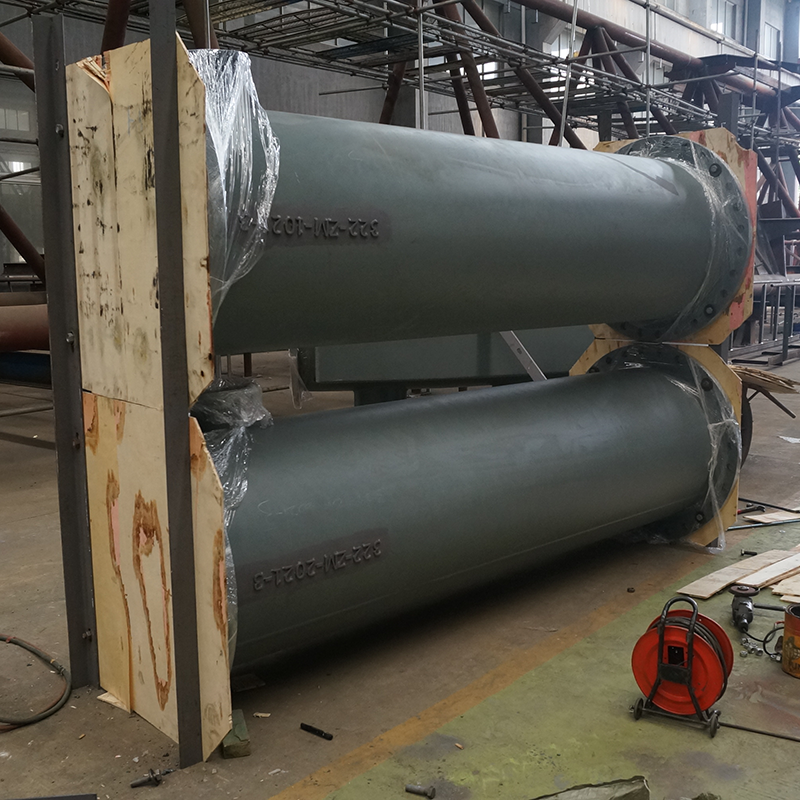
Ceramic lined steel pipes are manufactured using a high-tech production process – self igniting high-temperature clutch synthesis method. The pipe is composed of three layers, namely corundum ceramic, transition layer, and steel, from the inside out. The ceramic layer forms dense corundum ceramic (AL2O3) at high temperatures above 2200 ℃, and forms a strong bond with the steel pipe through the transition layer.
The full name of ceramic lined steel pipe is ceramic lined composite steel pipe.
Composite pipes have fully utilized the high strength, toughness, impact resistance, welding performance of steel pipes, as well as the high hardness, wear resistance, corrosion resistance, and heat resistance of corundum ceramics, overcoming the characteristics of low hardness, poor wear resistance, and poor ceramic toughness of steel pipes. Therefore, composite pipes have good comprehensive properties such as wear resistance, heat resistance, corrosion resistance, mechanical and thermal shock resistance, and good weldability. It is an ideal wear-resistant and corrosion-resistant pipeline for conveying granular materials, grinding, corrosive media, etc.
Due to its wear resistance, corrosion resistance, and heat resistance, this pipe can be widely used in industries such as power, metallurgy, mining, coal, and chemical industry as a material for conveying abrasive particles such as sand, stone, coal powder, ash, aluminum liquid, and corrosive media. It is an ideal wear-resistant and corrosion-resistant pipeline.
Good wear resistance
Due to the use of corundum ceramic (a-AL2O3) as the inner lining, the Mohs hardness of ceramic composite pipes can reach 9.0, which is equivalent to HRC90 or above. Therefore, grinding media transported in industries such as metallurgy, power, mining, and coal all have high wear resistance. Through industrial operation, it has been confirmed that its wear resistance life is ten times or even dozens of times that of quenched steel.
Low operating resistance
SHS ceramic composite pipes, due to their smooth inner surface and never rusting, do not have convex spiral lines on the inner surface like seamless steel pipes. After testing the roughness of the inner surface and the resistance characteristics of clean water by relevant testing units, the smoothness of the inner surface is better than any metal pipeline, with a resistance coefficient of 0.0193, slightly lower than seamless pipes. Therefore, this pipe has the characteristics of low operating resistance, which can reduce operating costs.
Corrosion resistance and anti scaling
Due to the fact that the ceramic layer of the steel is (a-AL2O3), it belongs to a neutral characteristic. Therefore, it has acid and alkali resistance, seawater corrosion resistance, and also has characteristics such as anti scaling.
Good temperature resistance and heat-resistant punching performance
Due to the fact that the alumina ceramic (a-AL2O3) has a single stable crystalline structure. Therefore, the composite pipe can operate normally for a long time in the temperature range of -50-700 ℃. The linear expansion coefficient of the material is 6-8 × 10⁻⁶/0C, which is about half of that of the steel pipe. The material has good thermal stability.
Low engineering cost
Ceramic composite pipes are lightweight and reasonably priced. 50% lighter in weight than cast stone pipes with the same inner diameter; Compared to wear-resistant alloy pipes, it is 20-30% lighter in weight and has good wear and corrosion resistance. Due to its long service life, the cost of supports and hangers, transportation, installation, and operation is reduced. After comparing the project budget and actual situation of the design institute and construction unit, the cost of this pipe project is equivalent to that of cast stone, and compared with wear-resistant alloy pipes, the project cost is reduced by about 20%.
Easy installation and construction
Due to its light weight and good welding performance. Therefore, welding, flanges, quick connections, and other methods can be used for convenient construction and installation, while reducing installation costs.
Ceramic steel pipes are fundamentally different from traditional steel pipes, wear-resistant alloy cast steel pipes, cast stone pipes, as well as steel plastic and steel rubber pipes. The outer layer of ceramic steel pipe is steel pipe, and the inner layer is corundum. The Vickers hardness of the corundum layer is as high as 100-1500 (Rockwell hardness is 90-98), equivalent to tungsten cobalt hard gold. The wear resistance is more than 20 times higher than that of carbon steel pipes, and it has much better performance than the usually bonded corundum grinding wheel. Nowadays, corundum grinding wheel is still the main grinding wheel for various types of grinding machines to cut quenched steel. The corundum layer in ceramic steel pipes can wear off the corundum grinding wheel. The wear resistance of ceramic steel pipes mainly relies on the inner layer of a few millimeters thick corundum layer, with a Mohs hardness of 9, second only to diamond and silicon carbide. Among all oxides, its hardness is the highest.
The ceramic wear-resistant steel pipe with inner lining is manufactured using self propagating high-temperature synthesis centrifugal method. The melting point of corundum in the ceramic steel pipe is 2045 ℃. Due to the special structure of the corundum layer and the steel layer due to process reasons, the stress field is also special. At room temperature, the ceramic layer is subjected to compressive stress, while the steel layer is subjected to tensile stress. The two are opposed and unified, forming a balanced whole. Only when the temperature rises above 400 ℃, due to the different coefficients of thermal expansion between the two, the new stress field generated by thermal expansion cancels out the existing stress field in the ceramic steel pipe, resulting in a free equilibrium state between the ceramic layer and the steel layer. When the temperature rises to 900 ℃, the lined ceramic wear-resistant steel pipe is placed in cold water and soaked repeatedly. The composite layer does not crack or collapse, exhibiting unparalleled thermal shock resistance compared to ordinary ceramics. This performance is very useful in engineering construction. Due to its outer layer being made of steel and the fact that the inner layer does not crack even when heated, flanges, blowing ports, explosion-proof doors, etc. can be welded during construction, and direct welding methods can also be used for connection. This is better than wear-resistant cast stone pipes, wear-resistant cast steel pipes, rare earth wear-resistant steel pipes, bimetallic composite pipes, steel plastic pipes, and steel rubber pipes, which are not easy to weld or cannot be welded during construction. The ceramic wear-resistant steel pipe with inner lining has good mechanical impact resistance, and the composite layer does not break or fall off during transportation, installation, tapping, and self weight bending deformation between the two supports.
Contact Information for Ceramic-Lined Chut Inquiries
For more information about Ceramic-Lined Chut or to obtain customized solutions, please contact us:
- Contact Person: Frank
- Tel: 86-510-82305188-8060
- Mobile: 86-18605101203
- Mail: [email protected]
- Address: 15-16F, Building A10, No. 777, JianZhu West Road, Binhu District, Wuxi, Jiangsu, 214072. P.R. China
We look forward to collaborating with you and providing robust support and services for your business.